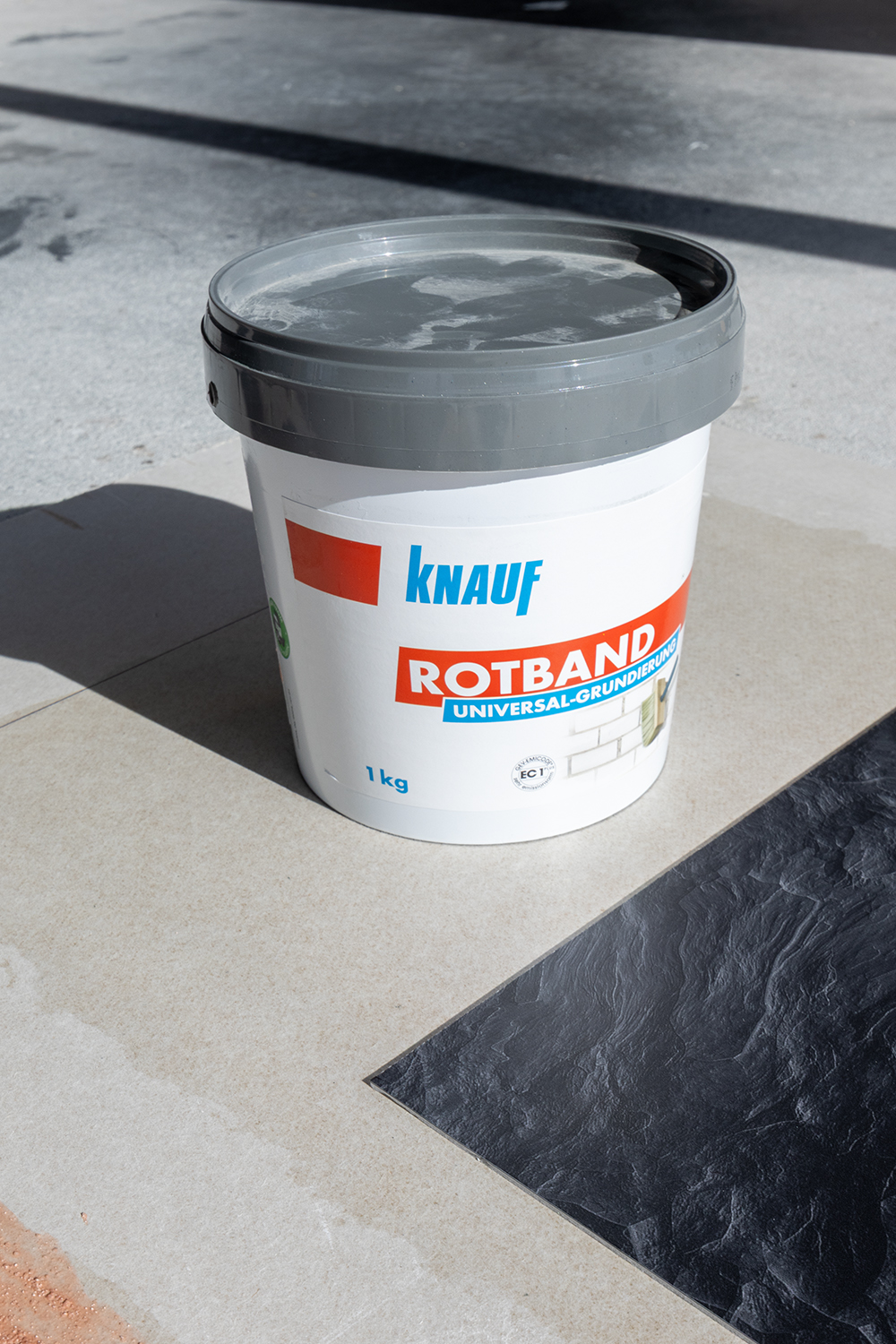

In many cases, priming makes sense, especially if the substrate is difficult to bond.
By priming with adhesive primer, the adhesive strength of the wall can be improved and the substrate optimally prepared for your self-adhesive kitchen splashback.
When should I prime?
Priming is recommended especially when your substrate is not reliably bondable. This can be the case, for example, if the wall:
- - slightly sands or chalks,
- - has been painted with special paints,
- - has residues or binders from plastering,
- - consists of areas with different adhesive properties.
Especially with substrates of different adhesive properties, priming helps to unify adhesion and create a better foundation for bonding.
Which primer is suitable?
For substrate preparation, we have successfully tested KNAUF ROTBAND UNIVERSAL PRIMER.
It is suitable for preparing the wall before applying your self-adhesive kitchen splashback.
Special primers and concrete primer, on the other hand, did not work reliably in our tests and are therefore not recommended for this application. This is because they contain additives that are not suitable for the adhesive of kitchen splashbacks: These primers are designed for special applications.
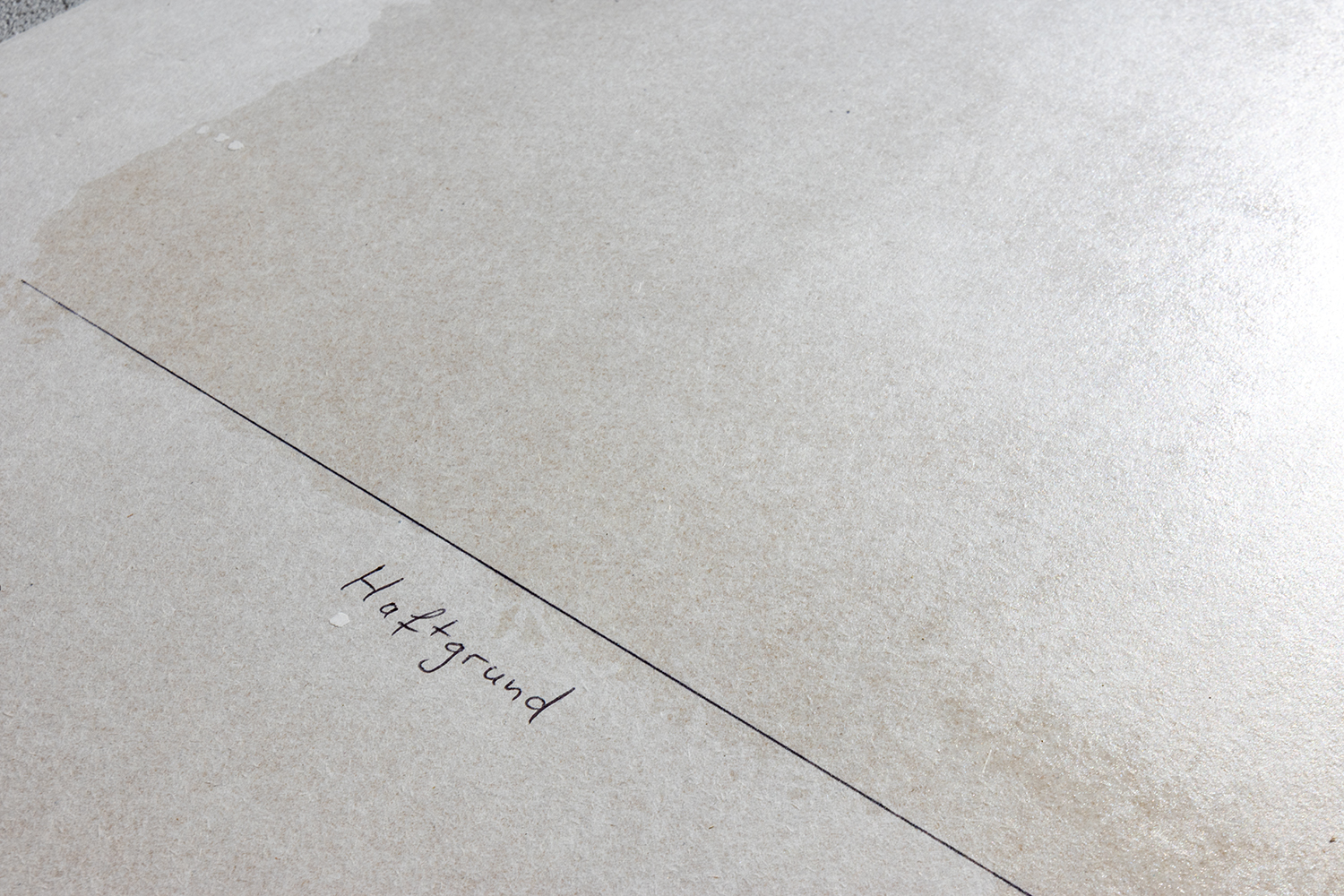
How do I prime the substrate correctly?
First, thoroughly clean the wall and remove loose, sanding, or chalking components. Then apply the KNAUF ROTBAND UNIVERSAL PRIMER evenly to the substrate and let it dry completely.
Once the primer has dried completely, you can attach your self-adhesive kitchen splashback.